When the Mountains Say Enough..

Updated: Aug 15
Backpacking to Canyon Creek Lakes in California’s Trinity Alps: A Journey of Discovery
Photography and words by Aaron

A quiet camp above Canyon Creek Lakes as sunset settles over the Trinity Alps.
I had planned three full days in the Trinity Alps Wilderness. The route would total close to 10,000 feet of elevation gain. On paper, it looked like the perfect trip: long days, remote lakes, and enough distance to disappear into the mountains for a while. In reality, the trail offered something different. It gave me one hard-earned night above Canyon Creek Lakes, a reminder to respect the terrain, and a reason to return better prepared.
The Plan on Paper
I started in the afternoon on Canyon Creek Trail, with roughly nine miles between me and the lakes. The heat settled into the canyon, making every exposed section feel longer. Thankfully, I had carried enough water, but the temperature still took its toll.
The first miles followed the creek through the forest. Occasionally, the mountain tops peeked through the trees. Each glimpse made the effort feel worthwhile. As the sun dipped lower, warm light began to reach into the canyon. The trail slowly traded shade for granite, and the scale of the landscape opened around me. What had been distant peaks transformed into walls and ridgelines surrounding the route.

The granite basin and high ridge lines surrounding Canyon Creek Lakes.
The Final Mile
The last mile was the part that emptied the tank. It felt like nearly 1,000 feet of climbing packed into one final push. By then, every step had become deliberate. When I finally reached the lakes, I turned around and looked back over the canyon I had just climbed. The exhaustion was immediate, but so was the satisfaction. Looking down the length of the valley made the effort feel real in a way no elevation profile could.
A few backpackers had already set up near the water. I had come looking for solitude, so I continued another half mile and climbed to a higher shelf overlooking the lake and valley. It was exactly the kind of campsite I had imagined: granite underfoot, mountains on every side, and a clear view into the fading light.
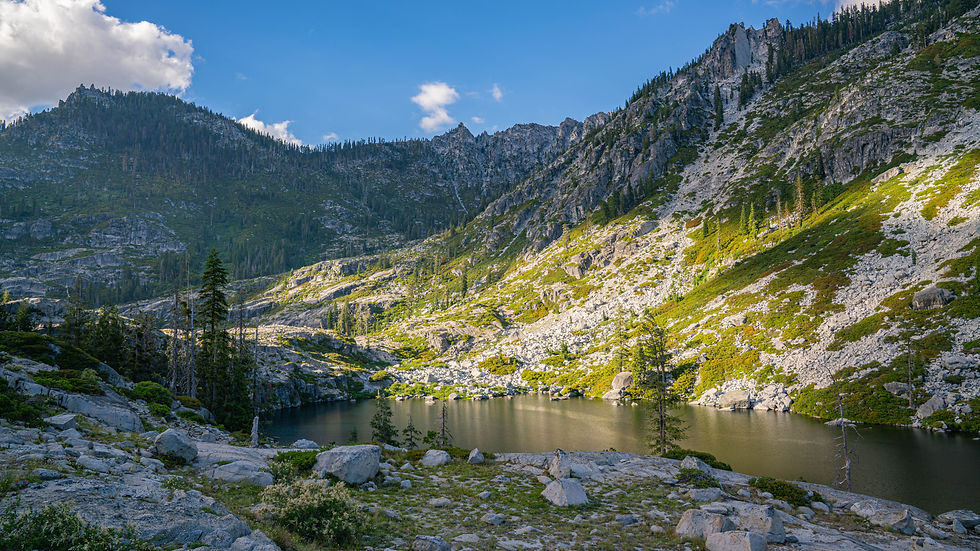
Morning light moves across Canyon Creek Lakes before the hike back down the canyon.
A Bear Below Camp
As sunset color spread across the clouds, I heard shouting from the camps below. At first, I could not tell what was happening. Then I saw the reason. A large black bear had wandered to the edge of their camp. The hikers yelled and made noise for several minutes until the bear finally moved away in the opposite direction.
From my higher camp, the scene was a reminder that even a peaceful evening in the mountains still belongs to the wild. Once things settled, I prepared a dry meal on my stove and made a small fire for atmosphere. The flames were modest, but against the granite and the wide evening sky, they completed the scene. The night stayed surprisingly warm, and after the long climb, sleep came easily.
Morning Changes the Plan
The next morning, I walked around the basin before taking a swim in the lake. The cold water did exactly what I hoped it would: it woke me up and cleared the fatigue from my head. For a few minutes, I felt ready to continue with the ambitious second day I had planned.
After breakfast, reality caught up with me. My legs were shot. The first day had taken far more out of me than I expected, and the remaining route would demand another major day of climbing. I had not prepared well enough for a three-day trip with close to 10,000 feet of elevation gain. Continuing would not have been adventurous; it would have been stubborn.
So, I made the decision to turn back. It was disappointing, but it was also the right choice. Mountains do not care about an itinerary, and knowing when to change a plan is part of traveling through them responsibly. The route would still be there. I could come back stronger, better trained, and ready to experience the places I had missed.
The Trail Back
The return trip gave me time to notice what I had rushed past on the way up. I stopped repeatedly to take in the canyon, the granite walls, and the creek moving beside the trail. Without the pressure of reaching camp before dark, I could slow down and enjoy the landscape rather than simply work through it.
At one point, I found a deep, slow-moving pool in the river. I stopped for another swim and ate lunch beside the water. It became one of the best moments of the trip, not because it was part of the plan, but because it was not. It was a chance to sit still, cool off, and let the day unfold without forcing it.
As I continued down, I passed early risers who were moving more slowly up the trail. There were backpackers of different ages and experience levels, all heading into the same mountains for their own reasons. Seeing so many people out there was encouraging. The free spirit that draws people into wild places is not disappearing. Younger generations were out exploring, struggling up the same climbs, laughing with friends, and building their own stories.
Not the Trip I Planned
This was supposed to be a three-day backpacking trip. Instead, it became a hard two-day lesson in preparation, humility, and paying attention to what my body was telling me. Cutting the trip short did not erase the experience. I still climbed into a beautiful alpine basin, watched sunset from above the lake, saw a bear move through camp, swam in cold mountain water, and photographed a landscape I had worked hard to reach.
The trip did not become the adventure I planned, but it became one worth remembering. I will return to the Trinity Alps after more training, and when I do, I will arrive with a better understanding of the terrain and of myself. Sometimes the most important part of a journey is not reaching every destination. Sometimes it is knowing when to turn around, appreciating what you did reach, and leaving enough unfinished to call you back.
Embracing the Unexpected
Every adventure teaches us something valuable. This trip reminded me that nature is unpredictable. It can challenge us in ways we don’t expect. Embracing the unexpected can lead to beautiful moments. I learned to appreciate the journey, not just the destination.
As I reflect on this experience, I feel grateful. I captured stunning photographs that tell a story. The landscapes I encountered were breathtaking. The connections I made with nature and myself were profound. I encourage you to seek out your own adventures. Explore the wild, embrace the challenges, and cherish the moments that make your journey unique.
Remember, it’s not just about where you go, but how you feel along the way. Each trip is an opportunity to grow, learn, and connect with the world around you. So, take that leap. Venture into the unknown. You might just find the adventure of a lifetime waiting for you.
---


Comments